Curriculum Development: Advanced Models and Design Approaches
Ruma Bose, MD
Issue 3 | Volume 2 | August 2026

Key Takeaways
- Curriculum develoment is a systematic, iterative process that needs alignment with the learner’s needs.
- No single curriculum model fits the needs of the learner, in an educational setting. Models such as Tyler’s objective model, Taba’s grassroots Model, Backward Design, and ADDIE offer complementary approaches that can be selected for adapting according to learners, institutional priorities, and educational context.
- Effective curriculum design begins with clearlyd efined outcomes and maintains alignment between objectives, leanring activities and assessment.
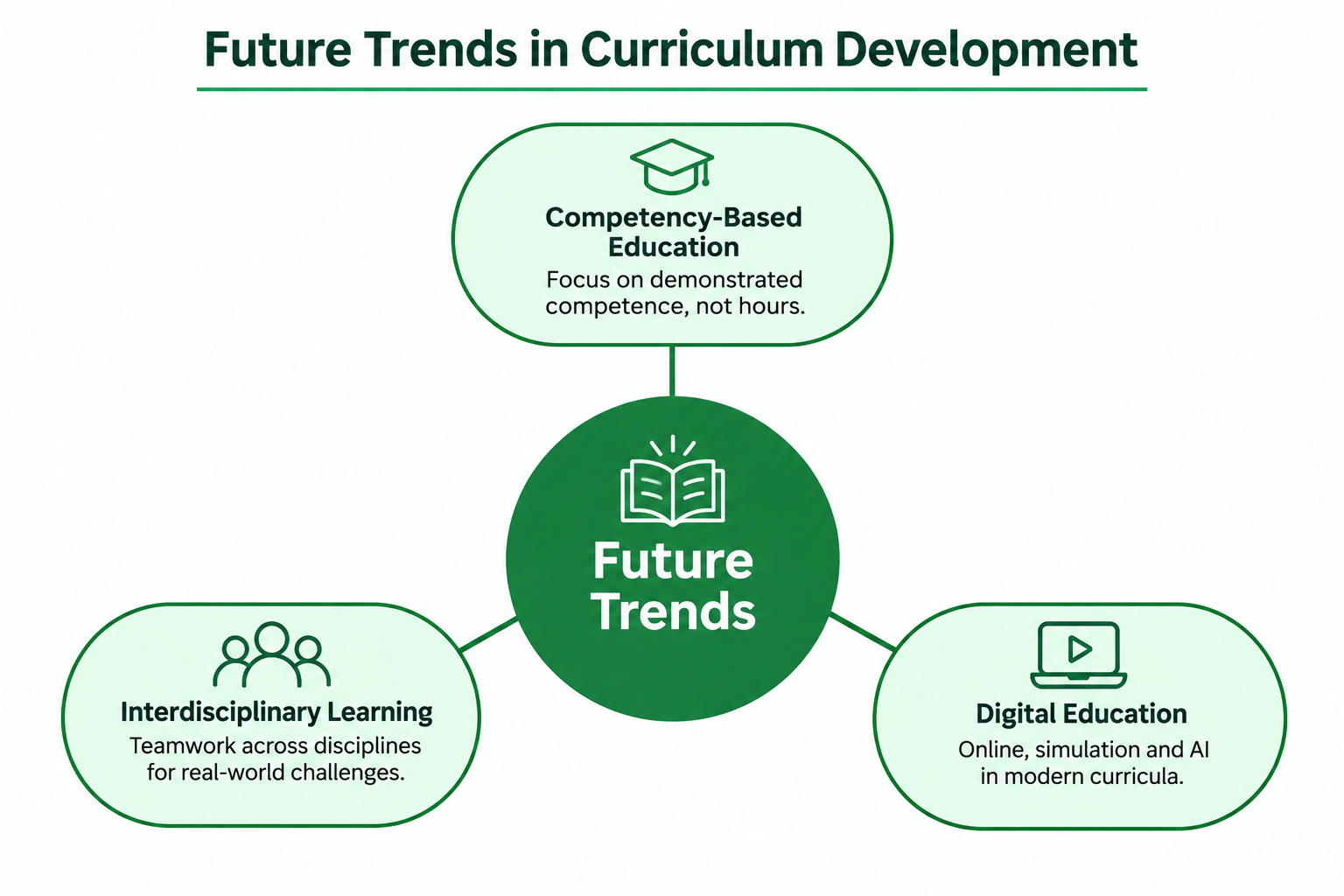
- Modern curricula must adapt to evolving educational demands, including digital technologies, simulation and artificial intelligence, diverse learner populations, resource limitations, competency-based education, and interdisciplinary learning.
Introduction
Curriculum development is a systematic process of planning, designing, implementing, and evaluating educational programs. An effective curriculum ensures that educational objectives are aligned with instructional methods, learning experiences, and assessment strategies. Modern curriculum development has evolved from simple content planning to comprehensive instructional design that emphasizes learner outcomes, competency development, continuous improvement, and evidence-based teaching practices.
Several curriculum models have shaped educational practice over the past century. Each model offers a unique perspective on how curricula should be designed, implemented, and evaluated. Understanding these models enables educators to select appropriate frameworks based on institutional goals, learner needs, and educational contexts.
Core Elements of Curriculum
Every curriculum consists of several interrelated components that collectively guide the educational process.
- Objectives — Objectives define the knowledge, skills, attitudes, and competencies learners are expected to achieve. Well-written objectives provide direction for instructional planning and serve as benchmarks for evaluating learning outcomes.
- Content — Content includes the knowledge, concepts, principles, and skills that students are expected to learn. Content selection should be relevant, current, evidence-based, and appropriate for the learners’ developmental level.
- Learning Experiences — Learning experiences refer to the activities that enable students to acquire knowledge and develop skills. These may include lectures, discussions, simulations, laboratory exercises, clinical experiences, group projects, and independent learning.
- Teaching Strategies — Teaching strategies encompass the instructional methods educators use to facilitate learning. Effective curricula employ a variety of learner-centered approaches such as problem-based learning, case discussions, collaborative learning, flipped classrooms, and simulation-based education.
- Assessment and Evaluation — Assessment measures student achievement and determines whether curriculum objectives have been met. Evaluation also examines the effectiveness of the curriculum itself and identifies opportunities for improvement. Both formative and summative assessments play essential roles in continuous quality improvement.
The Curriculum Development Process
Curriculum development generally follows a logical sequence of steps.
- Needs Assessment — The process begins by identifying educational needs through stakeholder input, learner assessments, institutional priorities, accreditation requirements, and societal expectations.
- Define Objectives — Based on the identified needs, educators formulate clear learning objectives that specify the expected outcomes.
- Select Content — Appropriate subject matter is selected to support achievement of the learning objectives while ensuring relevance and accuracy.
- Plan Learning Activities — Educational activities are designed to promote active learning and facilitate the development of desired competencies.
- Implement the Curriculum — The curriculum is delivered using appropriate instructional methods, educational technologies, and faculty expertise.
- Evaluate and Revise — Continuous evaluation identifies strengths and weaknesses of the curriculum. Feedback from students, faculty, and outcome measures guides ongoing revisions and improvements.
The Curriculum Development Process
Tyler’s Objective Model
Developed by Ralph Tyler in 1949, Tyler’s model is one of the most influential curriculum development frameworks. The model is built around four fundamental questions: (1) What educational objectives should be achieved? (2) What learning experiences will help achieve these objectives? (3) How should these experiences be organized? (4) How can learning outcomes be evaluated? Tyler’s model is highly structured and objective-oriented, emphasizing measurable outcomes and alignment between objectives, instruction, and assessment. Because of its systematic nature, it remains widely used in higher education, professional training, and competency-based education.
Strengths: clear organization; strong emphasis on measurable outcomes; easy alignment of teaching and assessment.
Taba’s Grassroots Model
Hilda Taba proposed a teacher-centered approach to curriculum development. Unlike Tyler’s top-down model, Taba believed curriculum should be developed by teachers because they best understand learners’ needs. Her model follows seven sequential steps: diagnose learner needs, formulate objectives, select content, organize content, select learning experiences, organize learning experiences, and evaluate outcomes. This inductive approach encourages teachers to actively participate in curriculum design, making it more adaptable to local educational contexts.
Advantages: encourages teacher ownership; responsive to learner needs; flexible and adaptable.
Limitations: time intensive; requires experienced educators; difficult to standardize across institutions. Backward Design Model
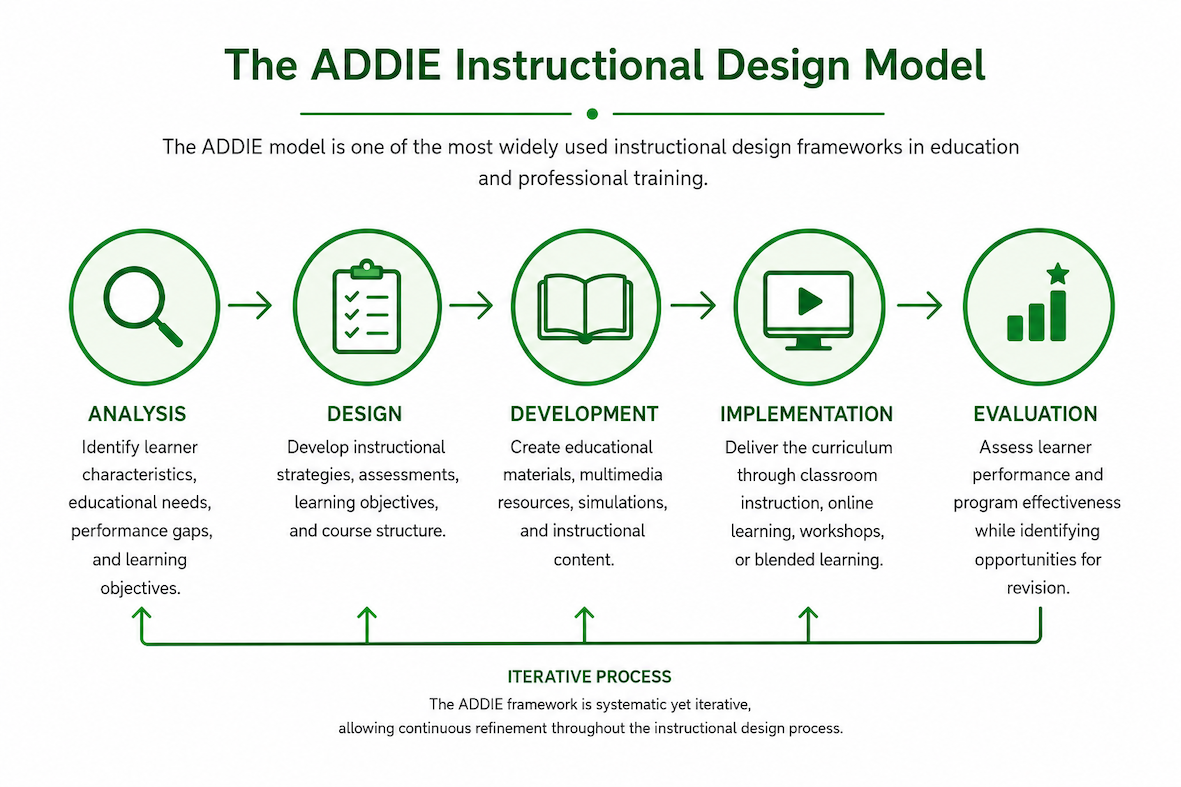
Developed by Wiggins and McTighe, the Backward Design model begins with the end in mind. Rather than starting with content, educators first identify the desired learning outcomes; assessments are then designed to measure these outcomes before instructional activities are planned. The three stages are: identify desired learning results, determine acceptable evidence of learning, and plan instructional activities. This model promotes alignment among objectives, assessments, and instructional methods, ensuring that all educational activities support the intended outcomes. Backward Design is particularly valuable in competency-based medical education because it focuses on demonstrable learner performance rather than content coverage alone. The ADDIE Instructional Design Model.
Challenges in Curriculum Development
- Technology Integration — Educators must effectively incorporate digital learning platforms, artificial intelligence, simulation, virtual reality, and online educational resources into teaching.
- Diverse Learners — Modern classrooms include learners with varying educational backgrounds, cultures, learning styles, and accessibility needs, requiring flexible instructional approaches.
- Resource Constraints — Limited faculty time, financial resources, infrastructure, and technological support can hinder curriculum implementation.
- Balancing Theory and Practice — Successful curricula must integrate foundational knowledge with practical application to prepare learners for real-world professional practice.
Conclusion
Curriculum development is a dynamic and continuous process that requires careful planning, implementation, evaluation, and revision. Foundational models such as Tyler’s Objective Model, Taba’s Grassroots Model, Wheeler’s Cyclical Model, Kerr’s Flexible Model, Backward Design, and the ADDIE framework each offer valuable perspectives on designing effective educational programs.
No single model is universally applicable. Effective curriculum designers often combine elements from multiple approaches to create learner-centered, competency-based curricula that meet institutional goals while addressing the evolving needs of learners and society. Continuous evaluation and adaptation remain essential to maintaining educational quality and relevance.