UPCOMING
NEXT ISSUE - DECEMBER 2026
INTERACTIVE MODULES INCORPORATING ECHOCARDIOGRAPHY AND ECHOCARDIOGRAMS
PROCEDURAL TEACHING VIDEOS
MORE PROBLEM BASED LEARNING DISCUSSION MODULES
INTERACTIVE MODULES
This spotlight introduces a Problem-Based Learning Discussion (PBLD) case on tachyarrhythmias developed for departmental teaching, built around a single evolving patient scenario with an embedded audience-response question and staged case progressions.
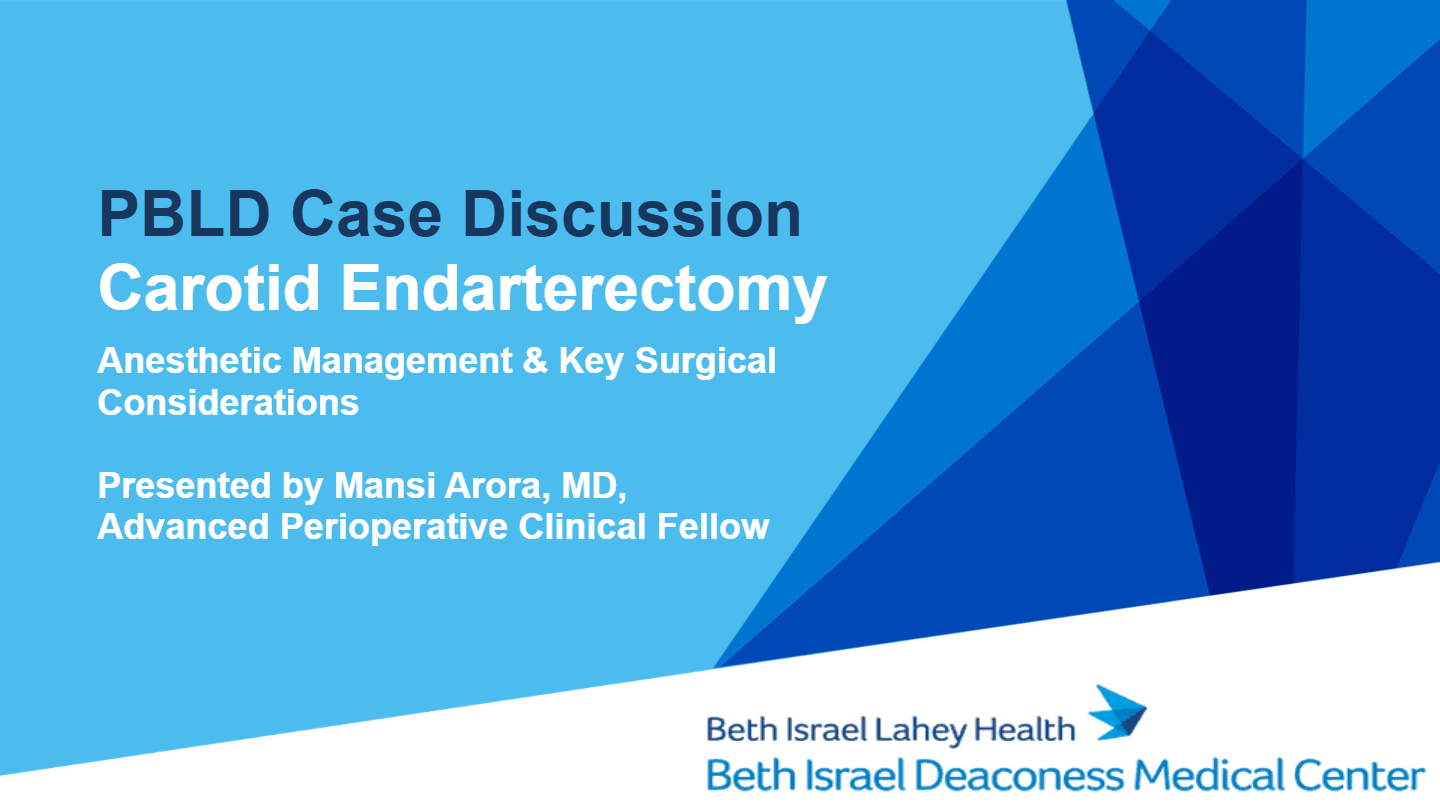
This Problem-Based Learning Discussion (PBLD) uses a structured clinical case to guide a learner-driven, interactive exploration of the perioperative anesthetic management of CEA. Topics include anesthetic technique selection (regional versus general anesthesia), neuromonitoring modalities, intraoperative hemodynamic management, shunting indications, emergence considerations, and recognition of procedure-specific postoperative complications — including cerebral hyperperfusion syndrome and cranial nerve injury.
Huma Syed Hussain, MD, Thy Vo, MD, Lisa Kunze, MD
Case by Case Insights into Advanced Echocardiographic Diagnostics
David Benavides Zora, MD, Sumeeta Kapoor, MD, Yifan Bu, MD, Maurizio Bottiroli, MD
Perioperative Management of Carotid Body Paragangliomas
Sumeeta Kapoor, MD, Gifty Addae, MD, Maria Borrelli, DO, Robina Matyal, MD
Sumeeta Kapoor, MD, Yifan Bu, MD, Benjamin Aronow, MD, Matthew Gao, DO
Feroze Mahmood, MD
Optimization of Analgesia for Rib Fractures: Evidence-Based Approaches
Laura Cook, NP Andrey Rakalin, MD
Case Presentation From Vascular Division
Kaavya Mahajan, MD Jacopo Colombo, MD
Federico Puerta Martinez, MD Victor Polshin, MD
- Peer-Reviewed Medical Journals
- Stay informed with the latest clinical research and medical breakthroughs.
“Empowering healthcare professionals through evidence-based knowledge.”
- Hands-On Ultrasound Training
- Learn from leading experts in real-world clinical settings.
- Gain practical skills to improve diagnostic accuracy.
- Courses designed for all levels, from beginners to experienced practitioners.
Global Health Initiatives & Learning
Explore healthcare challenges and solutions around the world.
Participate in international collaborations to improve patient outcomes.
“Transforming healthcare through global learning and collaboration.”
Pedagogy in Education
Jacqueline Hannan, PhD, Dario Winterton, MD
Published: April 18, 2025
Federico Puerta Martinez, MD, Dario Winterton, MD
Published: April 18, 2025
Robina Matyal, MD
Published: April 18, 2025
Patricia O’Connor, CRNA, Sarah Mooradian, CRNA, Sandra Palmer, NAR, Mike Sharma, NAR, Priscilla Robinson, NAR
Published: April 18, 2025
Yifan Bu, MD
Published: April 18, 2025
Shirin Saeed, MD, Peva Gbagornah, MD, Mark Robitaille, MD
Published: April 18, 2025
Shiri Savir, MD (Moderator), Robina Matyal, MD (Panelist), Sara Neves, MD (Panelist), John Mitchell, MD (Panelist)
Published: April 18, 2025
NEWS and UPDATES
Grand Rounds Workshop Showcases Innovations in Education Technology
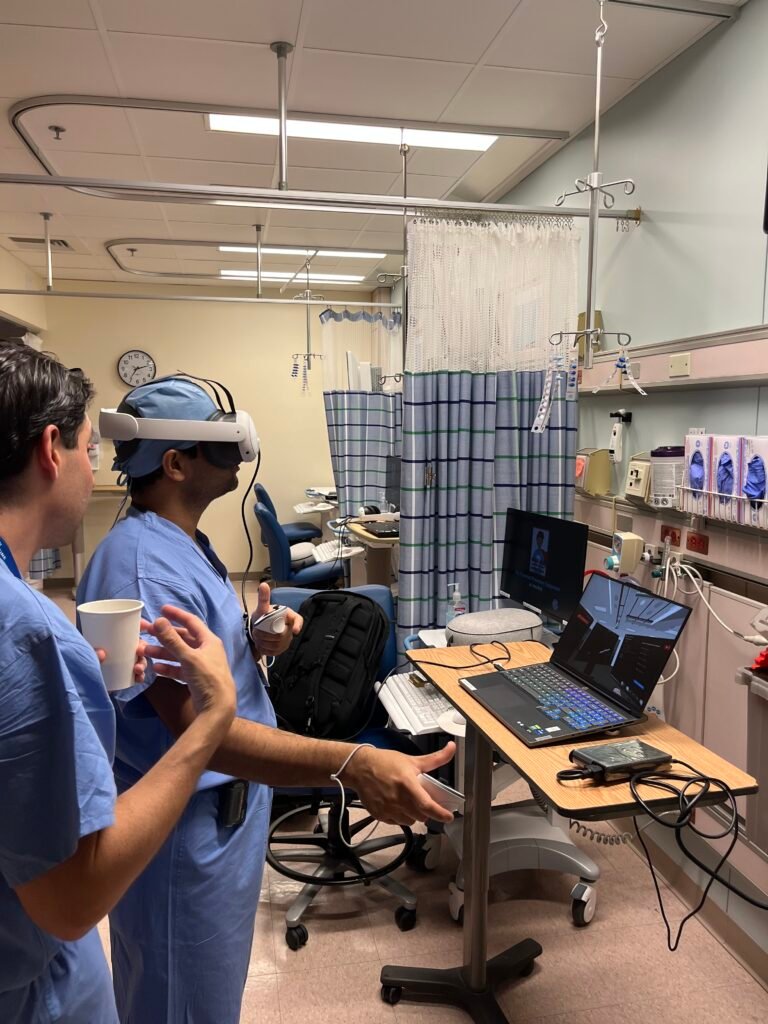
- Virtual Reality Modules simulating central line and chest tube placements, as well as immersive anatomy tutorials.
- Demonstrations on how to integrate ChatGPT and OpenEvidence into clinical teaching and curriculum design.
- A dedicated station on intraoperative teaching methods, offering tips on real-time instruction and feedback.
- An overview of a robust educational website featuring ultrasound training, CME-accredited courses, clinical cases, and video libraries.
- A walkthrough of Docebo, our Learning Management System, which will host structured online courses and track learner progress.
- Introduction to C8, a centralized repository that consolidates all educational resources, templates, and tools for easy access and collaboration.
Combined Education and Quality & Safety Grand Rounds Faculty Workshop
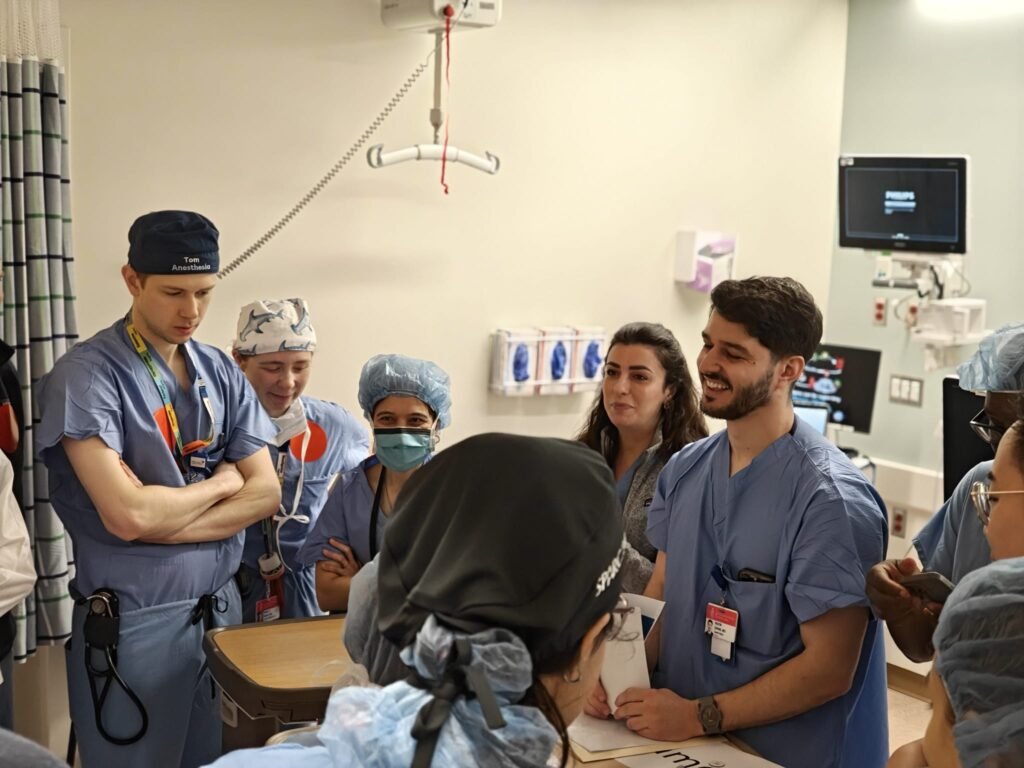
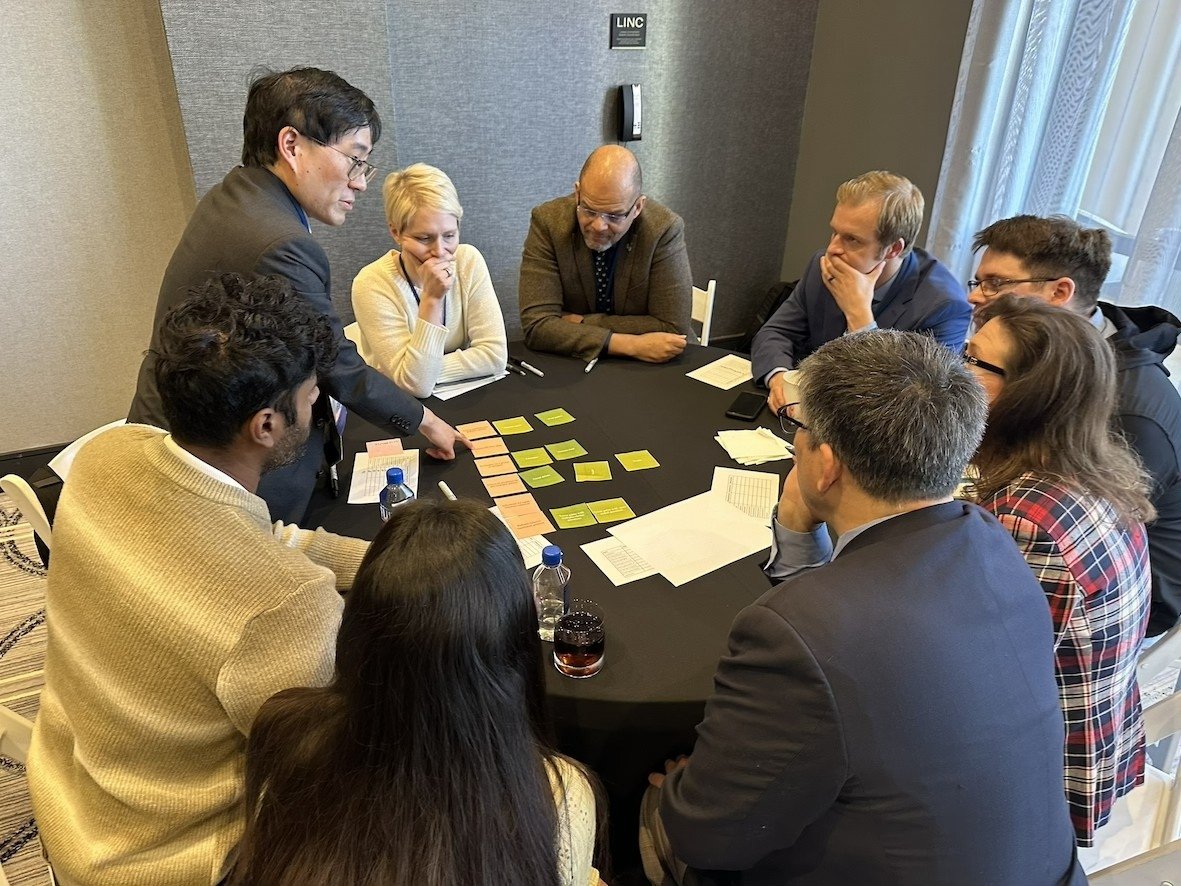
On June 18th, 2025, our department hosted the Combined Education and Quality & Safety (Q&S) Grand Rounds Faculty Workshop, a dynamic and interactive event designed to promote patient safety, and enhance quality improvement practices across the department.
The workshop featured five focused simulation and discussion stations, each addressing a critical topic identified through real clinical events, M&M reviews, and departmental Q&S concerns. Participants rotated through the stations in small groups, engaging in practical, case-based learning and reviewing relevant evidence and protocols to support safer, high-quality care.
Workshop Stations Included:
Processed EEG (pEEG) Monitoring
Emphasis on cognitive aids, monitoring standards, and interpretation of raw vs. processed EEG.Train-of-Four (TOF) and Neuromuscular Blockade Management
Explored best practices for TOF monitoring and reversal strategies including Sugammadex use.Blood Product Administration in the OR
Focused on safety protocols, reducing human error, and minimizing blood product wastage.PACU Pause and Standardized Handoffs
Highlighted tools like iPASS, communication strategies, and a demonstration of the PACU handoff tool.Anesthesia Considerations for Patients with Impella Devices
Reviewed anesthesia management, device understanding, and critical intraoperative considerations.
Participants were encouraged to complete pre-workshop readings and multimedia resources to enhance their learning experience and promote active discussion during the sessions.
Echo Lab Fellows’ Presentation to Northwestern’s Chief of Cardiac Surgery
Echo Lab research fellows Drs. Shirin Saeed, Adil Manji, and Usman Ahmed presented the lab’s ongoing projects and research focus areas at Surgery Grand Rounds on June 11th, 2025 during the visit of Dr. Douglas R. Johnston, Chief of Cardiac Surgery at Northwestern University. Their presentation highlighted a diverse portfolio of investigations, including basic science projects exploring purinergic signaling in females undergoing cardiac surgery, altered mitochondrial metabolism in postmenopausal women, and distinct miRNA signatures associated with postoperative atrial fibrillation. They also showcased advancements in 3D printing for mitral valve modeling. In outcomes research, the team is analyzing sex-based differences, process improvement initiatives, and leveraging large datasets such as STS, NSQIP, VQI, and NRD. Echocardiographic research featured the transition from qualitative to quantitative assessment using 3-dimensional imaging. In the educational domain, they discussed innovations in ultrasound education, including kinematic metric tools for psychomotor skill acquisition, virtual reality platforms, and a dedicated website offering educational materials, quizzes, case discussions, lecture videos, CME courses, and a medical journal.