Human Factors Applications in Anesthesia Practice: Part 1
Jacqueline Hannan PhD
Robina Matyal, MD
Issue 8 | Volume 1 | September 2025


Human Factors Applications in the Perioperative Setting: Part 1
Human factors engineering (HFE) is defined as: the scientific discipline concerned with understanding (1) interactions among humans and other elements of a system, and (2) the profession that applies theory, principles, data, and
methods of design to optimize human well-being and overall system performance. The origins of HFE have roots
in psychology, physiology, and industrial design, as these fields became increasingly interested in the fit between
humans and tools.
HFE methodologies can be leveraged to provide understanding about complex, high-risk domains, identify opportunities for procedural improvement, and support overall system safety. This multipart series will explore the
applications of HFE in healthcare, with specific focus on the ways that HFE practices improve the safety and quality
of perioperative care.
History of Human Factors
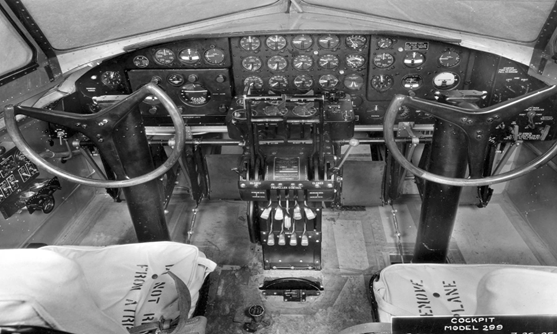
The true catalyst in forming the field of HFE was the rapid technological advancement that took place during World War II, with specific focus in the aviation and military domains. Psychologists began recognizing how poor control panel design within airplane cockpits influenced operational errors [1]. The lack of salience and uniformity of gauges, levers, and buttons significantly contributed to misinterpretation of the system state and improper actions taken (Figure 1). Additionally, a growing concern about the effects of circadian rhythm on pilot performance led to the consideration of designing systems and processes to best fit natural human tendencies and ultimately began the human factors discipline. This period marked the formalization of human factors: psychologists, engineers, and physiologists collaborated to redesign controls, displays, and systems to align with human capabilities and limitations.
Following the war, HFE began expanding into other domains and evolving to support the growth of technology. In the aerospace industry, NASA integrated human factors in cockpit design, space shuttle controls, and astronaut life-support systems [2]. In factories during the industrial revolution, industrial engineering began to focus not just on efficiency, but also on comfort, safety, and long-term health [3]. Implementation of physical ergonomics provided work layout improvements to reduce the number of work-related musculoskeletal injuries (WMSDs) that result from repetitive and forceful jobs. Additionally, HFE has become a prominent aspect of the automotive industry, with user experience considerations informing dashboard readability and safety mechanisms [4]. As automation advances in vehicle design, human-machine interaction considerations are essential to ensure safety for the passengers and other pedestrians on the road and in other vehicles.
By the 1970s and 1980s, HFE matured into a multidisciplinary science drawing from psychology, engineering, biomechanics, and cognitive science [5]. With the rise of computing, human factors evolved to address human computer interaction [6]. This expanded HFE into the digital space, emphasizing usability, error reduction, and user experience [7]. Modern HFE now focuses on systems-level thinking: understanding how teams, environments, and organizations interact as whole systems.
Implementation of HF into Healthcare
Healthcare is complex, high-stakes, and highly variable. Like aviation in WWII, healthcare systems rely on humans interacting with technology under pressure, often in environments where errors can be catastrophic. Yet, for decades, healthcare lagged behind other industries in adopting formal HFE approaches [8]. The shift began in the 1990s, when research showed that many medical errors were preventable and often traced to system design issues rather than individual negligence. The Institute of Medicine’s landmark 1999 report To Err Is Human highlighted that up to 98,000 patients die each year in U.S. hospitals due to preventable errors, giving an urgent call for human factors integration [9].
HFE is now integrated into healthcare in multiple ways. One of the most prominent areas is in medical device design, where regulatory bodies such as the FDA require usability testing to ensure that devices and technologies are safe and intuitive to use [10]. Beyond medical devices, HFE also informs workflow and systems design, helping hospitals reconfigure processes such as patient handoffs, team communication, and medication administration to reduce error and improve coordination. The principles of human factors are also embedded in patient safety initiatives, including the widespread use of checklists and standardized protocols that reduce reliance on memory and minimize variability. In training, healthcare has drawn inspiration from the use of simulation in the aviation domain, employing simulation-based education to prepare teams for emergencies and high-stakes scenarios. As healthcare continues to integrate into digital spaces, human-computer interaction research has guided improvements in electronic health records, aiming to decrease clinician burden and reduce documentation errors.
Example Applications of HF in Perioperative Care
Perioperative care is one of the most human factors–intensive domains of healthcare, encompassing preoperative preparation, intraoperative management, and postoperative recovery. Each stage involves rapid decision-making, close interaction with technology, and coordination among multidisciplinary teams in a high-stakes environment. HFE applications can be seen across multiple aspects of perioperative practice. One critical area of concern is technology and information usability. Across the perioperative continuum, clinicians interact with electronic health records, monitoring systems, infusion pumps, and scheduling platforms. These tools must be intuitive and reliable to use under time pressure. Standardized and clear design features can reduce errors during high-stress situations. Alarm and alert management are particularly important in the perioperative environment, where providers often face an overwhelming number of notifications. HFE research supports strategies to minimize alarm and alert fatigue by ensuring that signals are both meaningful and actionable. Teamwork and communication also benefit from HFE integration. Perioperative care requires coordination among anesthesiologists, surgeons, nurses, and support staff, with frequent handoffs between teams and transitions across phases of care. Structured tools, such as surgical safety checklists, preoperative briefings, and standardized handoff protocols, ensure that critical information is shared consistently and clearly. Finally, training and simulation practice represent a powerful application of human factors in perioperative care. Simulation-based education allows providers to practice crisis management, teamwork, rare complications, and handoff processes in a controlled environment. These exercises enhance individual and team performance while exposing latent system weaknesses, enabling improvements before patient safety is at risk. Together, these examples demonstrate how HFE is integrated into every layer of perioperative care, from the design of digital and physical tools to the organization of workflows and training programs. The result is a more resilient system that supports clinicians in delivering safe, reliable patient care.
Conclusion and Future Topics
This article is the first entry in our series about the applications of human factors in the perioperative environment. Throughout this series, we will focus on a variety of human factors topics in the healthcare setting. The following topic areas will be discussed in this series, to be published in future issues of our journal.
| Topic | Description |
|---|---|
| Situational Awareness | Monitoring multiple streams of information (patient vitals, surgical progress, equipment alarms) while avoiding fixation errors. |
| Communication and Teamwork | Clear, closed-loop communication with surgeons, nurses, perfusionists, and other anesthesia team members. Feeling comfortable speaking up and conducting safe handoffs. |
| Design of Equipment and Ergonomics | Designing workstations, anesthesia machines, and monitors that are intuitive and minimize error, and the use of wearable sensors to measure motion. |
| Decision-Making and Cognitive Bias | Focus on bias, tunnel vision, and overreliance on technology. |
| Stress, Fatigue, and Burnout | Long hours, night calls, and high cognitive demand can impair performance. |
| Learning from Errors and Near Misses | Non-punitive incident reporting and debriefing create opportunities for learning. |
| Education and Simulation | Simulation-based training allows practice of non-technical skills (communication, teamwork, decision-making) alongside technical skills. |
| Systems Thinking and Safety | Integration of checklists, cognitive aids, and learning from adverse events in the process of making system-level changes. |
REFERENCES
1. Chapanis, A. (1999). The Chapanis Chronicles: 50 Years of Human Factors Research, Education, and Design. Aegean.
2. Billings, C. E. (1997). Aviation Automation: The Search for a Human-Centered Approach. Lawrence Erlbaum Associates.
3. Grandjean, E. (1988). Fitting the Task to the Man: An Ergonomic Approach. Taylor & Francis.
4. Moray, N. (1998). Designing for transportation safety in the U.S.A. Ergonomics, 41(7), 1013–1026.
5. Wickens, C. D. (1992). Engineering Psychology and Human Performance. HarperCollins.
6. Norman, D. A. (1988). The Design of Everyday Things. Basic Books.
7. Shneiderman, B. (1987). Designing the User Interface: Strategies for Effective Human-Computer Interaction. Addison-Wesley.
8. Carayon, P. (2006). Human factors of complex sociotechnical systems. Applied Ergonomics, 37(4), 525–535.
9. Institute of Medicine. (1999). To Err Is Human: Building a Safer Health System. National Academies Press.
10. U.S. Food and Drug Administration. (2016). Applying Human Factors and Usability Engineering to Medical Devices:
Guidance for Industry and FDA Staff.