Thyroidectomy for Refractory Amiodarone-Induced Thyrotoxicosis in Cardiac Sarcoidosis with Recurrent Ventricular Tachycardia: A Perioperative Challenge
Mansi Arora MD
Ruma Bose MD
Issue 3 | Volume 2 | August 2026


KEY TAKEAWAYS
- Implement proactive multidisciplinary perioperative planning in patients with complex endocrine and cardiac disease undergoing high-risk surgery.
- Recognize perioperative challenges in patients with refractory amiodarone-induced
thyrotoxicosis and severe cardiomyopathy. - Perioperative CIED management must be individualized; magnet application effects are manufacturer-specific and should be confirmed preoperatively with electrophysiology. External defibrillation must be immediately available.
- Apply anesthetic strategies for high-risk thyroidectomy, including airway planning and avoidance of neuromuscular blockade for nerve monitoring.
- Postoperative vasoplegia in thyrotoxic patients with cardiomyopathy is multifactorial; vasopressin acting via V1 receptors independent of downregulated adrenergic pathways may be used as a first-line vasopressor.
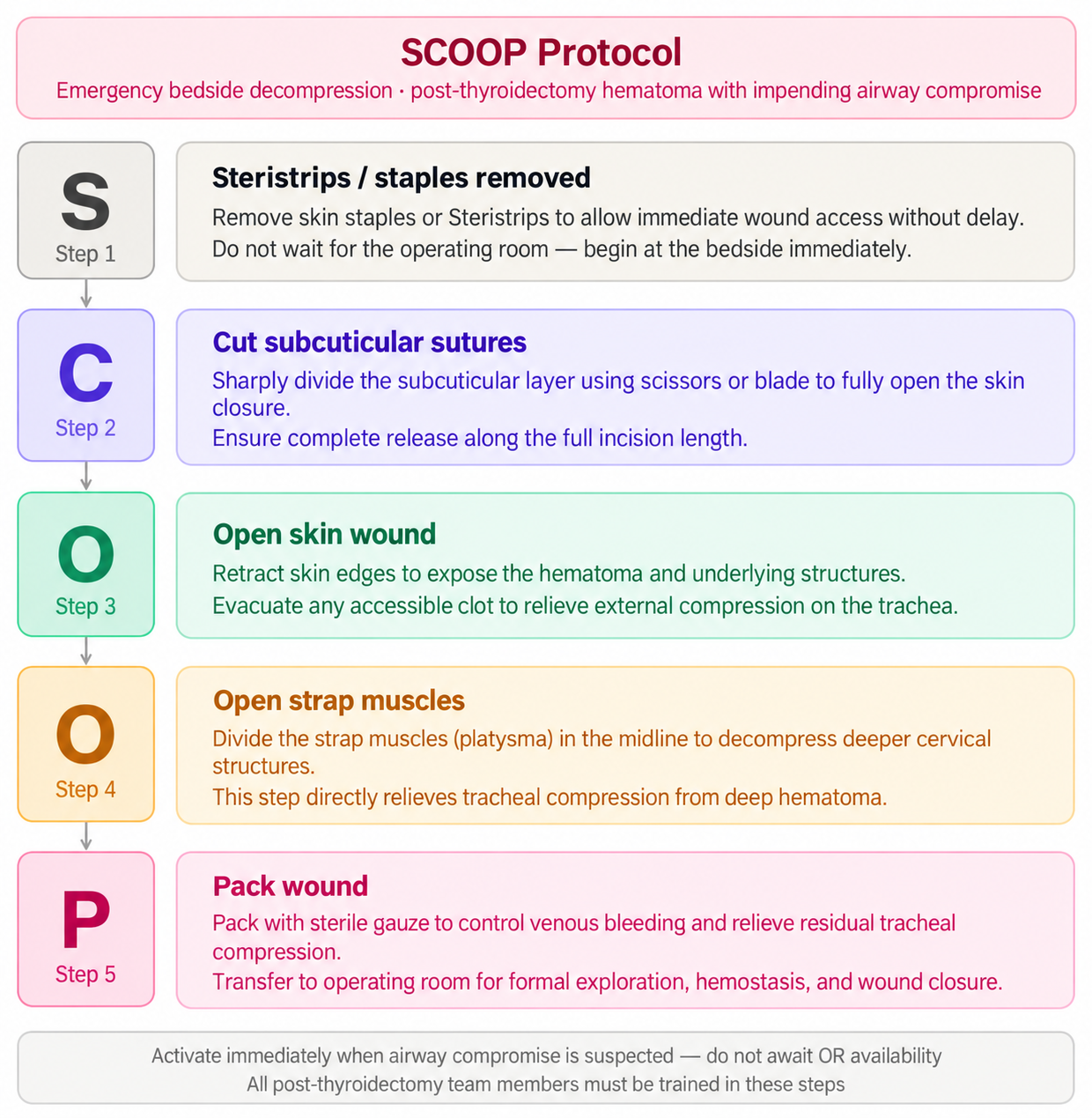
- Post-thyroidectomy complications viz. hematoma, hypocalcemia, and RLN injury- require structured postoperative vigilance. The SCOOP protocol should be immediately available and all team members should be familiar with its steps.
- Intraoperative TEE provides essential real-time assessment of hemodynamics, volume status, and ventricular function in high-risk cardiac patients undergoing non-cardiac surgery.
INTRODUCTION
Amiodarone-Induced Thyrotoxicosis (AIT) is a well-recognized but challenging complication of longterm amiodarone therapy, occurring in 2–12% of treated patients.1 Two distinct subtypes are recognized: type 1, driven by iodine excess triggering excess thyroid hormone synthesis in a structurally abnormal gland, and type 2, an iodine-induced destructive thyroiditis resulting in hormone release from damaged follicles.1 Both subtypes can precipitate life-threatening thyrotoxicosis, and differentiation has important therapeutic implications.
The management of AIT in patients with malignant ventricular arrhythmias presents a therapeutic paradox: amiodarone discontinuation risks life-threatening arrhythmia recurrence, while its continuation exacerbates thyroid dysfunction and its systemic hemodynamic sequelae. Current American Thyroid Association (ATA) guidelines acknowledge this dilemma and recommend individualized, multidisciplinary decision-making.2 When medical therapy fails, thyroidectomy offers the only definitive resolution but introduces additional perioperative risk, particularly in patients with advanced structural heart disease such as cardiac sarcoidosis.
The coexistence of cardiac sarcoidosis, a condition predisposing to reentrant ventricular arrhythmias through myocardial granulomatous infiltration and fibrosis, along with a Cardiac Resynchronization Therapy-Defibrillator (CRT-D) device adds substantial complexity to perioperative anesthetic planning. To our knowledge, published reports describing anesthetic management at this specific intersection of refractory AIT, cardiac sarcoidosis, and CRT-D remain limited. This case report describes the comprehensive perioperative anesthetic management of such a patient, with emphasis on preoperative optimization, intraoperative technique, device management, and postoperative complications.
CASE PRESENTATION
Patient History and Comorbidities
A 69-year-old male with a BMI of 44.3 kg/m² presented for elective total thyroidectomy. His past medical history was notable for biopsy-confirmed cardiac sarcoidosis complicated by HFrEF (EF 30–40%), recurrent VT with prior implantable cardioverter-defibrillator (ICD) shocks, high-degree atrioventricular (AV) block previously managed with a permanent pacemaker subsequently upgraded to a CRT-D, atrial fibrillation (AF) on therapeutic anticoagulation, obstructive sleep apnea (OSA) requiring continuous positive airway pressure (CPAP) therapy, and type 2 diabetes mellitus.
Diagnosis and Indication for Surgery
AIT type 2 was diagnosed based on standard ATA criteria.2 Despite treatment with methimazole and escalating corticosteroid doses, the patient developed recurrent thyrotoxicosis. In the weeks preceding surgery, he experienced multiple episodes of lightheadedness and dyspnea consistent with VT, all successfully terminated by antitachycardia pacing (ATP) via the CRT-D. Given refractory thyrotoxicosis and an escalating arrhythmia burden attributable to ongoing thyroid hormone excess, a formal multidisciplinary consensus involving endocrinology, cardiology and electrophysiology, anesthesia, and surgery was reached to proceed with thyroidectomy as a definitive therapy
PERIOPERATIVE MANAGEMENT
Preoperative Optimization
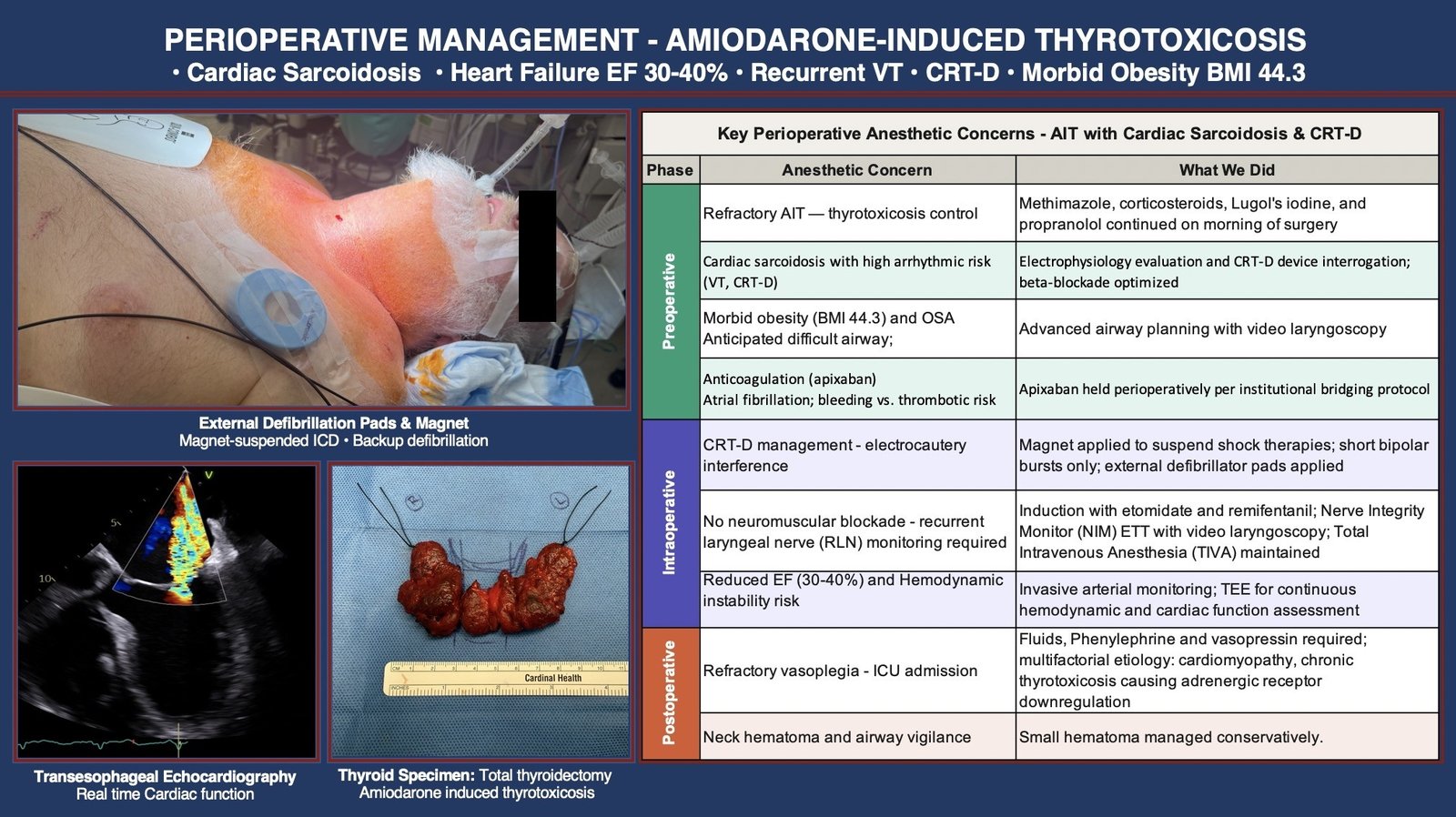
Preoperative management aimed to achieve the lowest feasible thyroid hormone burden while minimizing arrhythmic risk. The antithyroid regimen included methimazole, escalated systemic corticosteroids, and Lugol’s iodine solution to suppress thyroid hormone synthesis and reduce glandular hypervascularity prior to surgical resection.2 Propranolol was continued through the morning of surgery for heart rate control and attenuation of adrenergic manifestations of thyrotoxicosis. A dedicated preoperative electrophysiology consultation and CRT-D device interrogation were completed to confirm appropriate device function and program perioperative settings. The key anesthetic considerations were identified at a multidisciplinary preoperative evaluation as summarized in Figure 1.
Intraoperative Management
Standard American Society of Anesthesiologists (ASA) monitoring was supplemented with continuous invasive arterial blood pressure monitoring, secured before induction. In accordance with AHA perioperative cardiac Implantable Electronic Device (CIED) management guidelines,3 external defibrillator pads were applied before induction, and a programming magnet was applied over the CRT-D to suspend tachyarrhythmia detection therapies while preserving pacing function. Intraoperative management integrated tailored anesthesia without neuromuscular blockade for recurrent laryngeal nerve (RLN) monitoring, and device-specific precautions as detailed in Figure 1. The intraoperative course was uneventful. Hemodynamics remained stable throughout, with no arrhythmic events and preserved bilateral RLN signals.
Postoperative Course
In the immediate postoperative period, the patient developed refractory vasoplegia despite adequate volume resuscitation, requiring phenylephrine and low-dose vasopressin infusion with medical intensive care unit (MICU) admission for hemodynamic monitoring. Vasopressors were successfully weaned over the ensuing hours, and the patient was transferred to the ward without further cardiorespiratory complications. On postoperative day 1, a small, non-expanding incisional hematoma developed after a coughing episode and was managed conservatively with close wound surveillance. The multidisciplinary team remained prepared to perform immediate bedside wound decompression using the SCOOP protocol (Figure 2) should airway compromise occur. The patient was discharged home on postoperative day 3 on levothyroxine replacement with outpatient thyroid function follow-up.
DISCUSSION
AIT and the Paradox of Amiodarone
Continuation AIT creates a clinical dilemma that is particularly acute in patients with malignant ventricular arrhythmias. Amiodarone discontinuation risks destabilizing rhythm control in a population where arrhythmia may be life-threatening, while continuation perpetuates thyroid hormone excess with associated hemodynamic consequences.1 In cardiac sarcoidosis, granulomatous replacement of myocardium and associated conduction system fibrosis creates a favorable electrophysiological substrate for reentrant VT, amplifying this risk substantially. The ATA 2016 guidelines endorse thyroidectomy as the definitive therapeutic option for refractory AIT when medical therapy has failed, particularly when amiodarone cannot be safely discontinued.2 However, guidance specifically addressing the perioperative anesthetic management of such patients with concurrent advanced structural heart disease and implantable cardiac devices is sparse. The present case contributes a detailed management framework to this limited literature.
Anesthetic Strategy: Avoiding Neuromuscular Blockade
Intraoperative RLN monitoring has become standard practice in thyroid surgery due to its ability to identify the nerve in real time and reduce the risk of permanent injury, which occurs in 1–2% of thyroidectomies.4 Critically, NMBAs abolish the electromyographic (EMG) signal generated at the vocal cord muscle and must be avoided from induction through extubation. This constraint imposed a significant anesthetic challenge in this patient, given the compounding difficulty of morbid obesity, OSA, and the neck-extended surgical position.
Video laryngoscopy was selected as the primary intubation technique to maximize first-pass success and minimize airway manipulation. TIVA with propofol and remifentanil was employed as the maintenance strategy; remifentanil’s ultra-short context-sensitive half-life enabled precise titration of analgosedation without any residual sedative effects at emergence. The combination provided adequate suppression of laryngeal reflexes and hemodynamic responses to surgical stimulation without compromising EMG signal fidelity.
Postoperative Vasoplegia: Pathophysiology and Management
Postoperative vasoplegia, a distributive shock state characterized by low systemic vascular resistance with preserved or increased cardiac output, is an underrecognized complication in patients with thyrotoxicosis undergoing major surgery. Its pathophysiology in the current case was likely multifactorial.
Chronic thyroid hormone excess induces a hyperdynamic, catecholamine-mimetic hemodynamic state characterized by increased heart rate, cardiac output, and vascular compliance. Prolonged adrenergic receptor stimulation leads to receptor downregulation, reducing vascular responsiveness to endogenous and exogenous catecholamines. This adrenergic receptor desensitization may persist acutely in the immediate postoperative period despite surgical correction of the thyroid source. Amiodarone itself contributes to vasodilation through non-competitive alpha-adrenergic blockade and calcium channel antagonism, further blunting vasoconstrictor capacity. These pharmacological effects, superimposed on anesthetic-mediated vasodilation and the reduced cardiac reserve of HFrEF, created a compounded vasoplegic substrate in this patient.
Vasopressin is mechanistically rational in this context as its vasopressor action is mediated via vascular V1 receptors, which are distinct from and independent of the downregulated adrenergic pathway.
Anticipatory planning should include preoperative identification of vasoplegia risk, intraoperative TEE to distinguish distributive from cardiogenic hypotension, early vasopressor initiation, and ICU-level postoperative monitoring. Fluid administration should be judicious in the setting of HFrEF to avoid precipitating acute decompensation.
Post-Thyroidectomy Complications
Post-thyroidectomy hematoma is a potentially fatal complication occurring in 0.3–1.6% of cases, with the incidence rising in patients on anticoagulation or with coagulopathy.6 Venous congestion and progressive tracheal compression can precipitate airway obstruction within minutes of hematoma formation, necessitating immediate intervention. The SCOOP protocol (Figure 2) provides a systematic bedside approach to emergent wound decompression for situations in which airway compromise is imminent and return to the operating room is not immediately feasible.7
Hypocalcemia secondary to transient or permanent hypoparathyroidism is the most frequent complication following total thyroidectomy, with an incidence of transient hypocalcemia reported at 19–38% and permanent hypoparathyroidism at 1–3%.Routine postoperative monitoring of serum calcium and intact PTH allows timely identification and supplementation.
The Role of Multidisciplinary Coordination
The favorable outcome in this case was underpinned by early, structured coordination among endocrinology, cardiology/electrophysiology, anesthesiology, and surgery. Preoperative planning enabled optimization of thyrotoxicosis, device management, anesthetic strategy, and contingency planning for postoperative complications. This case reinforces a core principle: in patients with complex, interacting comorbidities, perioperative management should be developed as an integrated multidisciplinary framework rather than a series of isolated specialty-specific decisions, anticipating how concurrent physiologic derangements may interact under the stress of anesthesia and surgery
CONCLUSION
Refractory AIT in the context of cardiac sarcoidosis, HFrEF, and a CRT-D represents a rare convergence of anesthetic hazards that demands anticipatory, multidisciplinary perioperative planning. Key management priorities include preoperative thyroid hormone suppression, structured CIED management per society guidelines, NMBA-free anesthetic technique with video laryngoscopy and TIVA, continuous intraoperative TEE, and vigilant postoperative monitoring for vasoplegia, hematoma, and hypocalcemia. This case demonstrates that with comprehensive pre-procedural coordination, even patients with converging high-risk cardiac and endocrine comorbidities can undergo thyroidectomy with acceptable safety.
REFERENCES
- Bogazzi F, Tomisti L, Bartalena L, Aghini-Lombardi F, Martino E. Amiodarone and the thyroid: a 2012 update. J Endocrinol Invest. 2012;35(3):340-348. doi:10.3275/8298
- Ross DS, Burch HB, Cooper DS, et al. 2016 American Thyroid Association guidelines for diagnosis and management of hyperthyroidism and other causes of thyrotoxicosis. Thyroid. 2016;26(10):1343-1421. doi:10.1089/thy.2016.0229
- Wan EY, Rogers AJ, Lavelle M, et al. Periprocedural management and multidisciplinary care pathways for patients with cardiac implantable electronic devices: a scientific statement from the American Heart Association. Circulation. 2024;150(8):e183-e196.
doi:10.1161/CIR.0000000000001264 - Dralle H, Sekulla C, Haerting J, et al. Risk factors of paralysis and functional outcome after recurrent laryngeal nerve monitoring in thyroid surgery. Surgery. 2004;136(6):1310-1322. doi:10.1016/j.surg.2004.07.018
- Lange M, Van Aken H, Westphal M. Role of vasopressinergic V1 receptor agonists in the treatment of perioperative catecholamine-refractory arterial hypotension. Best Pract Res Clin Anaesthesiol. 2008;22(2):369-381. doi:10.1016/j.bpa.2008.02.001
Shaha AR, Jaffe BM. Practical management of post-thyroidectomy hematoma. J Surg Oncol. 1994;57(4):235-238. doi:10.1002/jso.2930570406 - Iliff HA, El-Boghdadly K, Ahmad I, et al. Management of haematoma after thyroid surgery: systematic review and multidisciplinary consensus guidelines from the Difficult Airway Society, the British Association of Endocrine and Thyroid Surgeons and the British Association of Otorhinolaryngology, Head and Neck Surgery. Anaesthesia. 2022;77(1):82-95. doi:10.1111/anae.15585